

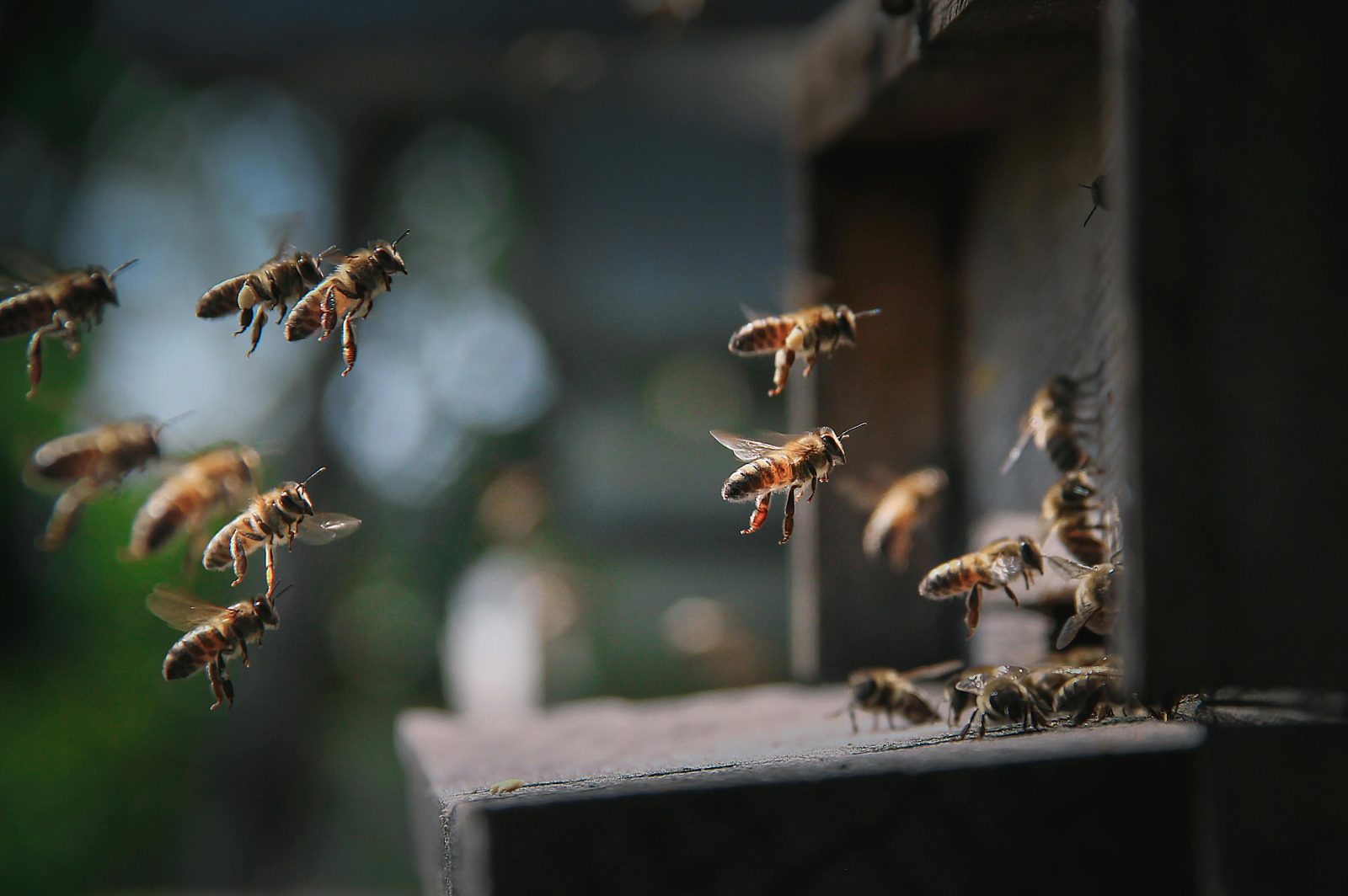


Every year on 20 May, the word pauses to thank one of its smallest but hardest working residents… the bee!
The year’s theme, “Bee Together for People and the Planet – A partnership that sustains us all”, highlights how humans and bees have worked together for millennia to feed communities and sustain ecosystems.
Why we celebrate bees
Officially declared in 2017 on the UN, World Bee Day honours the pioneer of modern beekeeping
Anton Janša (born 20 May 1734).
Plus, bees are the OG unicorn… they not only make honey, but, about 75% of the world’s crops rely on pollinators with bees doing the heavy lifting. Without them, crops like apples, pears, peaches, plums, macadamias, avocados, sunflowers, and lucerne, would struggle. In economic terms, bees contribute more than R10 billion annually to the national agricultural economy.
To celebrate World Bee Day, here are some fun facts about these incredible workers.
1. Most bees are loners
About 70% of the 21 000 bee species worldwide are solitary. A single female bee builds her nest, lays
an egg on a pollen ball, seals it and never meets her offspring.
2. Only female bees can sting
The stinger is actually a modified egg-lying organ so male bees can’t sting.
3. Bees recognise faces
The honeybee has the brain power to remember and recognise human faces. They use a technique called ‘configural processing’ – piecing together individual features like eyes, noses, and outlines, much like how humans do.
4. One bee makes very little honey
A single worker bee produces only about 1/12th to 1/8th of a teaspoon of honey in its lifetime. But when you scale that up to a full, thriving colony of 50 000–80 000 bees, the collective effort yields an impressive 14–27kg of honey per year.
5. Bees love the colour blue
Bees’ eyes are specially tuned to detect blue and ultraviolet light, which makes blue and violet flowers irresistible to them. That’s why plants like lavender and rosemary are buzzing with activity. Over millions of years of co-evolution, these flowers have evolved to signal high nectar rewards. For a foraging bee, a blue bloom usually means a sugar-rich, energy-efficient meal.
6. The Cape honeybee has a superpower
South Africa’s Apis mellifera capensis possesses a remarkable ability: it can clone itself through a process called thelytokous parthenogenesis. This means that a worker bee can produce a new queen if the colony needs one – a rare and powerful adaptation in the bee world.
7. Bees are fast and tireless
Bees are built for speed and endurance. They typically cruise at around 24 km/h, but can reach top speeds of 32 km/h. When returning to the hive heavily loaded with pollen or nectar, their pace slows to about 19 km/h.









Leave a comment