

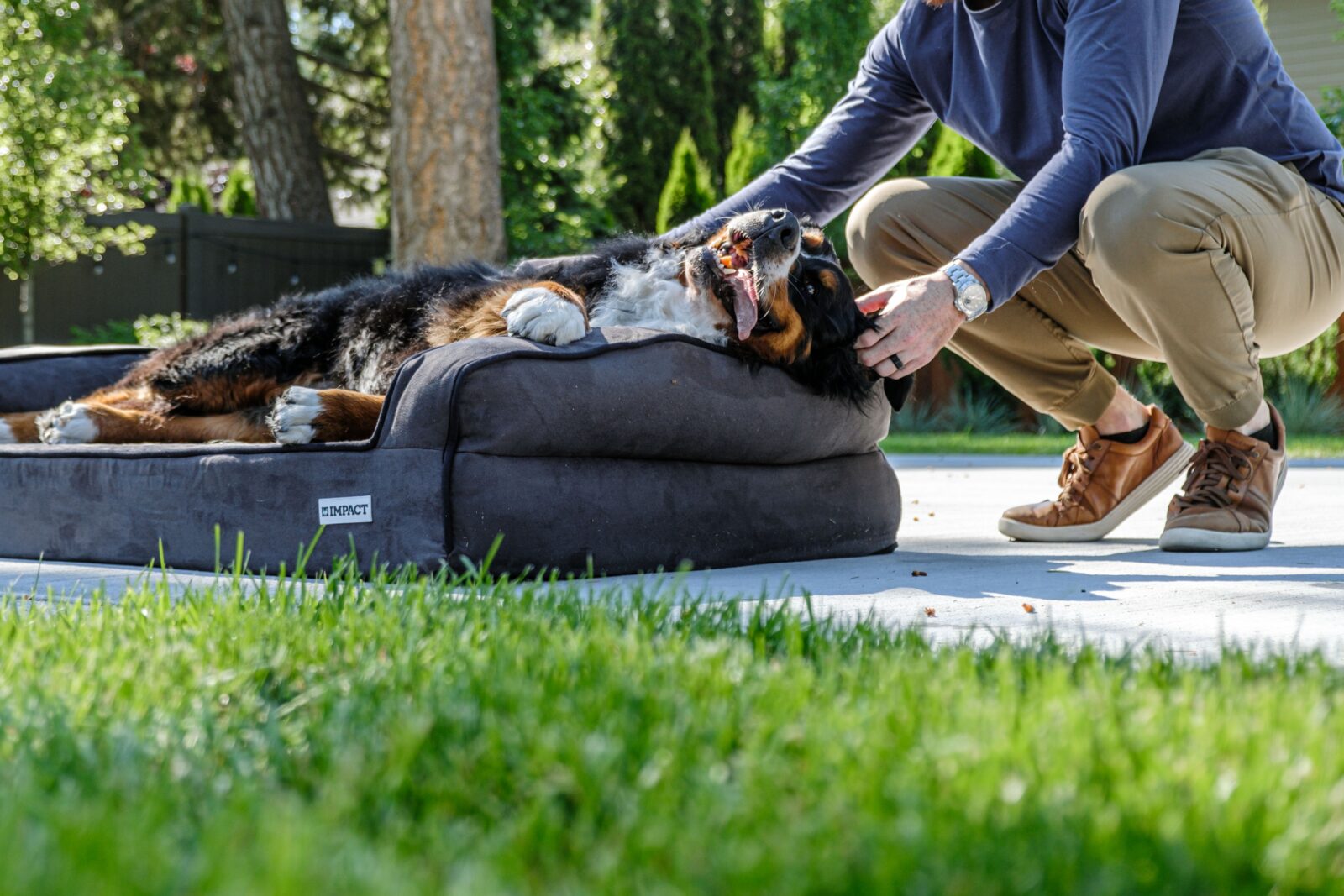

We wash our sheets weekly. Well, we hope you’re washing your sheets weekly.
But when was the last time you washed your pet’s bed?
It might be weeks before you look at that furry, slightly questionable sleeping spot and decide it’s time for a clean. A quick vacuum makes things look better, but your pet’s bedding, including blankets and removable bed covers, should be washed at least weekly.
So, where do you start?
We turned to Kaitlyn Wells, senior writer at The New York Times, author of children’s books A Family Looks Like Love and Under the Clam Moon, and pet mum to Sutton, for tips from someone who has spent years cleaning up after a cat and dog.
What you’ll need
- A vacuum cleaner
- Paper towels or a rag
- Pet stain remover
- An old toothbrush and hand soap
- Pet hair remover
- Washing machine
Step 1: Get rid of the pet hair
Every other day, give your pet’s bed and blankets a quick once-over to remove accumulated hair and dirt.
Before washing, vacuum the bedding thoroughly. A handheld vacuum or hose attachment works well and means less pet hair ends up in your washing machine.
For everyday maintenance, use a handheld pet hair remover.
Once you’re finished, take the bedding outside and give it a good shake.
Step 2: Pretreat stains and smells
Urine, drool or those mysterious marks you’d rather not investigate too closely should be treated before the bedding goes into the washing machine.
Soak the affected area with pet stain remover and blot it with a paper towel or rag.
For trapped odours between deeper washes, sprinkle bicarbonate of soda over the bedding, leave it for 10 minutes and then vacuum it up.
Step 3: Wash the bedding
Always check the care label first.
Most removable pet bed covers are machine washable on a cold or warm cycle. Inner stuffing might not be, so this should be spot cleaned and left to air.
Use a pet-safe, fragrance-free detergent and skip the fabric softener, which can irritate your pet’s skin or leave a smell strong enough to make them avoid their freshly cleaned bed.
Hot water can shrink covers and set smells, so follow the washing instructions carefully.
Pet bedding should also be washed separately from the rest of your laundry.
Step 4: Make sure it’s completely dry
Don’t put your pet’s bed back together while it’s still damp.
A damp bed can develop mildew and make that dreaded wet-dog smell even worse.
If you’re using a tumble dryer, keep it on a low setting. Alternatively, leave the bedding outside to dry in the sun.
And you’re done.
Keeping your pet’s favourite sleeping spot clean doesn’t need to become a major household mission. A regular vacuum, quick stain treatment and weekly wash will keep you on top of the fur, dirt and smells before that pet bed starts demanding attention of its own.









Leave a comment