

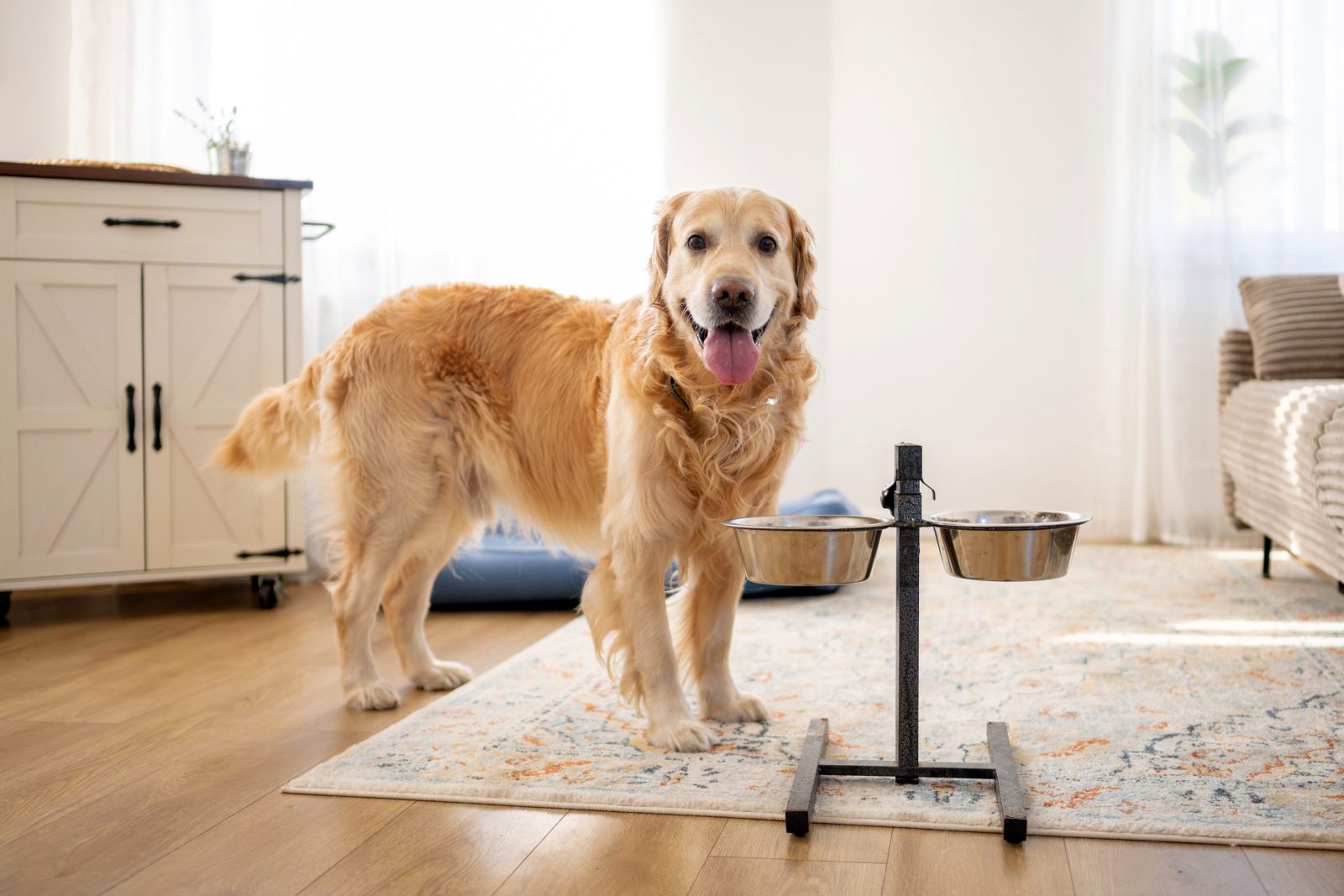

You’ve probably seen them in the shops or at a friend’s house – dog bowls sitting on a stand a few centimetres off the ground. They look fancy. But are elevated dog bowls actually better for your dog?
It’s not just a style thing. The height of your dog’s bowl can affect digestion, posture and even long-term health. Here’s what you need to know before you buy.
Easier on the joints and posture – especially for big dogs and seniors
Think about it. If you had to eat dinner with your plate on the floor, you’d be hunched over the whole time.
For large breeds like Great Danes, Labradors and German Shepherds or for any senior dog with arthritis +, being all the way to the floor puts strain on their necks, shoulders and back.
An elevated bowl brings food and water up to chest level. That means less bending, less pressure on the joints and a more natural eating position. Many owners notice their dog eats more comfortably and finishes meals faster.
Can help with digestion and bloat
This one is debated, but it matters for deep chested breeds.
Bloat or GDV is a life-threatening condition where a dog’s stomach fills with gas and twists. Breeds like Boxers, Weimaraner’s and Mastiffs are at higher risk.
For years, vets thought elevated bowls increased bloat risk. Newer research suggested its more about how fast your dog eats and when they exercise, not just bowl height.
Elevated bowls may help slow down gulping and reduce the amount of air a dog swallows while eating hunched over. Combined with a slow feeder insert, it can make mealtime calmer and easier to digest.
If your dog is a known bloat-risk breed, talk to your vet first. Don’t assume elevated means safer. Feeding smaller meals and no running one hour before or after eating matters more.
Keeps things cleaner and more hygienic
Floor level bowls get pushed around. Kibble and water ends up on the floor – add in pet prints and you’ve a got mess. An elevated stand keeps bowls in one place with less spilling, less mess and it’s easier for you to wipe underneath.
Better for dogs with megaoesophagus or neck issues
Dogs with megaoesophagus struggle to get food down to their stomach because their aoesophagus doesn’t contract properly. Vets often prescribe eating from an elevated position so gravity helps the food go down. Same for dogs recovering from neck surgery or with cervical spine issues. Not having to bend down can be the difference between eating comfortably and not eating at all.
When an elevated bowl is not needed
- Small breeds: For a chihuahua or dachshund, floor level is often more natural. Too high can actually cause them to stretch their necks unnaturally.
- Flat-faced breeds: Pugs, bulldogs and Frenchies can sometimes have a harder time with elevated bowls. It can make breathing while eating more difficult.
- Puppies: They’re still growing and learning coordination. A floor bowl is usually best until they’re full grown.








Leave a comment