

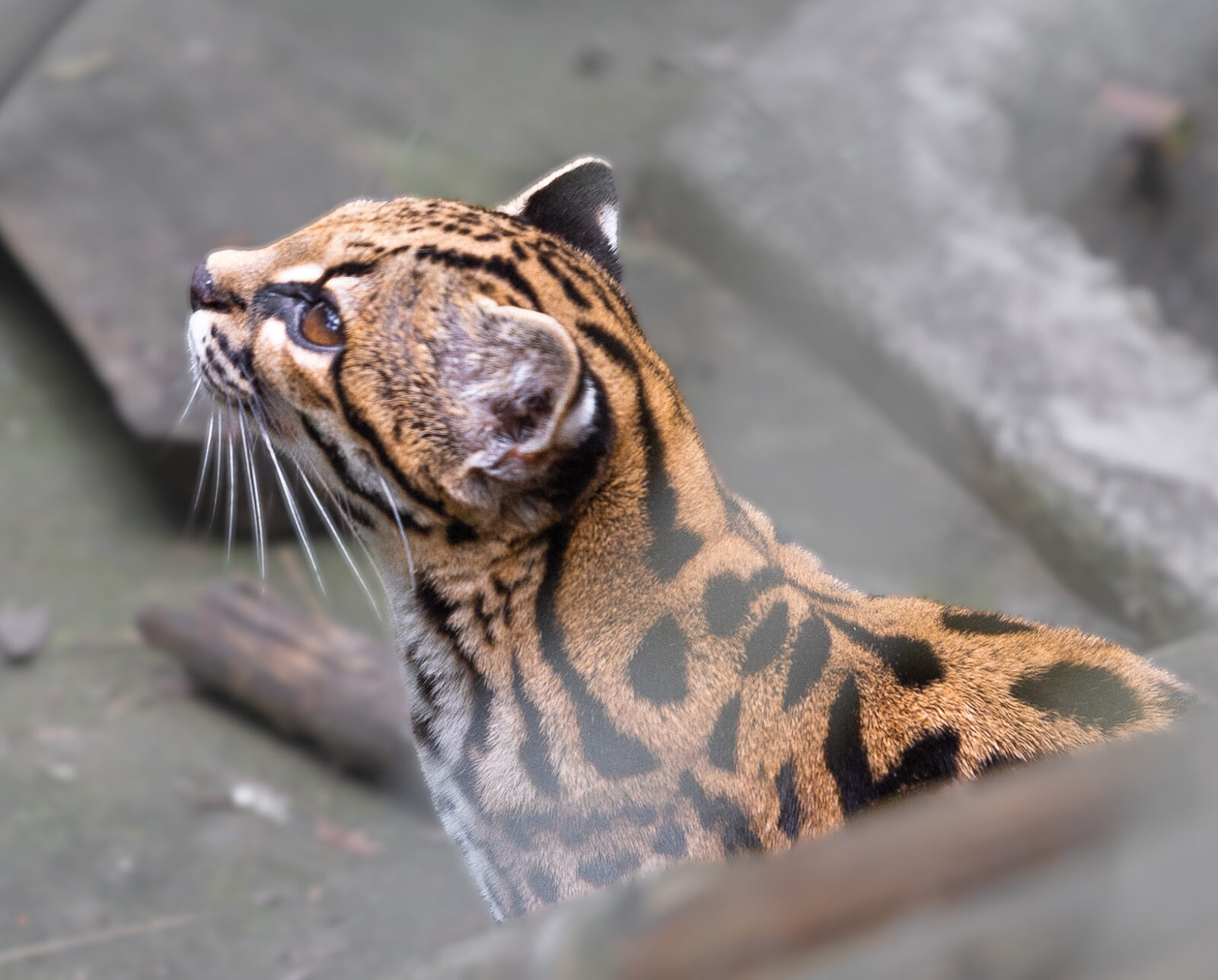

Say pssst pssst to Leopardus tilcayo, or the tilcayo cat, the first new living cat species formally named and described by scientists in more than a century.
And this little wild cat is smaller than the average domestic cat.
The spotted feline lives in Bolivia’s Yungas cloud forest in the Andes-Amazon basin, a mountainous, mist-covered region where researchers are still uncovering its extraordinary biodiversity.
The discovery began with a small cat that ended up at the Senda Verde Wildlife Sanctuary after being kept by a local family.
At first glance, it looked like a familiar tiger cat.
But wild cat conservationist Paola Nogales Ascarrunz noticed something was different.
That observation would eventually help uncover an entirely new species.
Scientists thought tiger cats were one species
For decades, tiger cats presented scientists with something of a mystery.
“Tiger cats have been enigmatic for decades,” explains Eduardo Eizirik, who collaborated with Ascarrunz as part of an international team, and is a professor at Brazil’s Pontifícia Universidade Católica do Rio Grande do Sul.
The cats were “once thought to be a single species (Leopardus tigrinus) based on their similar appearance.”
Researchers analysed DNA from museum specimens and living cats and found that what had previously appeared to be closely related tiger cats were actually at least five genetically distinct species, each with its own evolutionary history.
Among them was a species previously unknown to science: the little spotted cat from Bolivia.
Meet Leopardus tilcayo
Rather than giving the newly described species an entirely unfamiliar name, researchers turned to the communities that already knew the animal.
“We chose to name the [newly described] species ‘Tilcayo’ – the name local communities use to describe the cat,” says Ascarrunz. “It’s our way of honouring their ancestral knowledge and connection to this animal.”
The tilcayo is tiny.
It measures about 45cm from its head to the base of its tail and weighs roughly 1.3kg, making it smaller than the average domestic cat.
Its small size, however, does not make finding one in the wild easy.
Scientists are now searching for tilcayo cats in the wild
Ascarrunz is setting camera traps deep in the Yungas in an effort to document the newly recognised species in its natural habitat.
Researchers still know little about its population, behaviour and distribution, making evidence gathered in the wild important for understanding how the species should be protected.
The discovery also raises a much bigger question: how many species are still waiting to be identified?
“Showing the general public that even in a flagship group such as cats … there are still new species to be discovered may transmit an important message,” says Eizirik. “There are many undiscovered species out there in the world, and they are at risk of disappearing before we even discover them.”
More than a century after scientists last formally described a new living cat species, a tiny spotted feline from Bolivia’s cloud forests has shown there is still plenty we don’t know about the wild world around us.











Leave a comment