

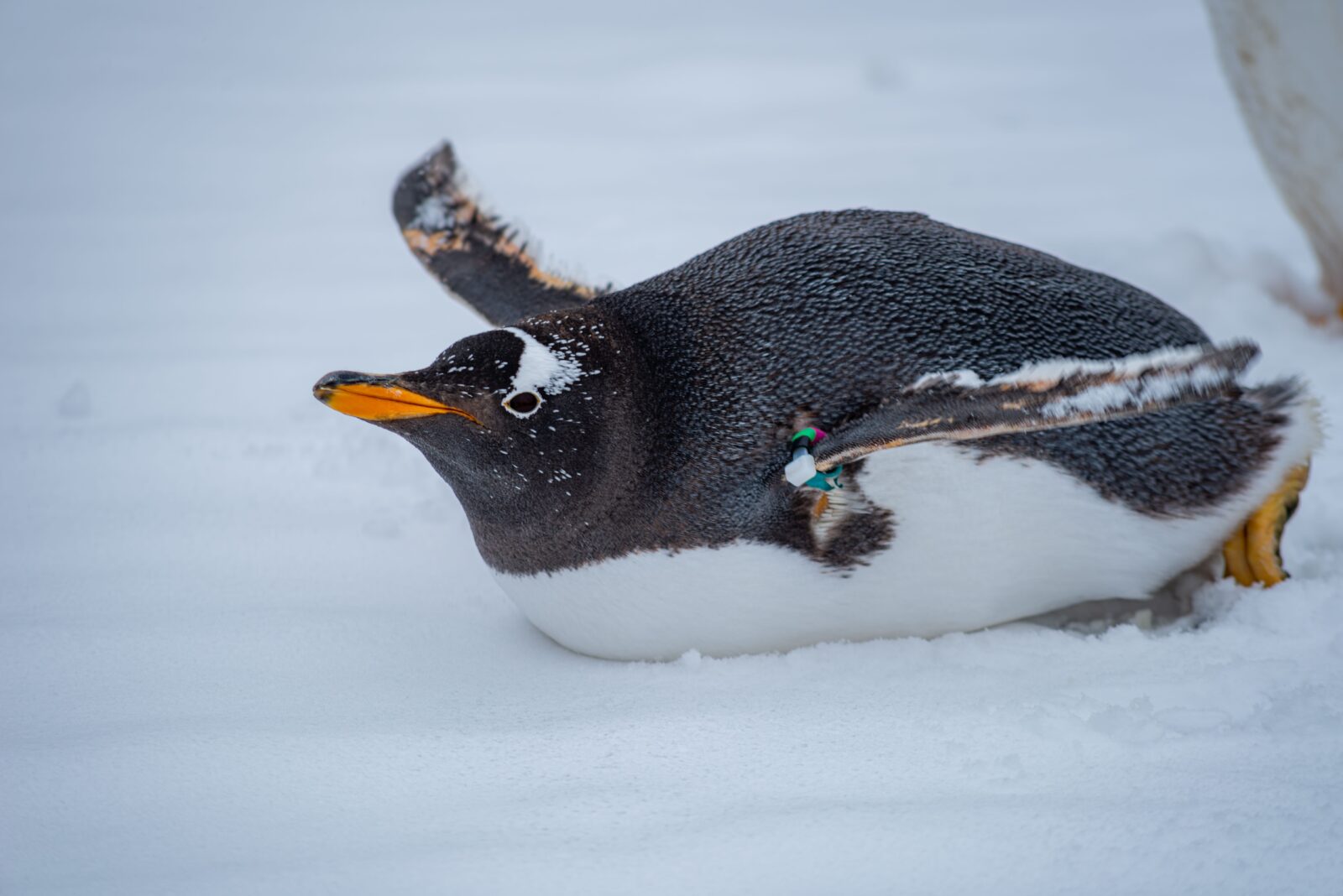

Scientists have identified a new penguin species living on a remote island in the Southern Ocean, marking the first time a new penguin species has been named in more than a century. However, researchers warn that climate change could threaten its survival.
The newly recognised southeastern gentoo penguin (Pygoscelis kerguelensis) lives on the Kerguelen Islands, also known as the Desolation Islands, almost 450km from the nearest landmass.
The discovery, published in the scientific journal Communications Biology, follows research showing that gentoo penguins, previously considered a single widespread species, are actually four genetically distinct species.
An international team led by scientists from Chile and the University of California, Berkeley, used genetic analysis to investigate differences between gentoo penguin populations.
Their findings offer new insight into how these birds evolved in isolated environments and raise concerns about their ability to survive changing climate conditions.
Scientists identify four distinct gentoo penguin species
Penguins are among the world’s most recognisable birds, from the African penguins found at Boulders Beach to the Emperor Penguins of Antarctica.
However, some penguin populations live on remote islands where their similarities to other species can make differences difficult to detect.
The southeastern gentoo penguin is an example of what scientists describe as a cryptic species.
These are species that look remarkably similar to their relatives but are genetically distinct.
Like other gentoo penguins, the southeastern gentoo has a black back and white underside.
Despite its familiar appearance, genetic evidence has established that it belongs to a separate evolutionary lineage.
The research identified four gentoo penguin species:
- Southeastern gentoo penguin: Found on the Kerguelen Islands.
- Eastern gentoo penguin: Found on islands including Crozet, Marion and Macquarie.
- Northern gentoo penguin: Found around the Falkland/Malvinas Islands and Martillo Island in South America.
- Southern gentoo penguin: Found in Antarctica.
How researchers discovered the new penguin species
The international research team used whole-genome sequencing to investigate the long-debated classification of gentoo penguins.
Scientists analysed genetic samples from 64 penguins across 10 breeding colonies.
They also examined differences in the birds’ physical appearance, calls, breeding schedules, diets and feeding behaviour.
The findings showed that the four populations had developed distinct genetic characteristics associated with their environments.
Researchers estimate that the four lineages diverged between 300,000 and 500,000 years ago.
Geographic isolation and ocean currents are believed to have played important roles in shaping their evolution.
How the four gentoo penguin species adapted to their environments
Although the four species share a similar appearance, the research identified genetic differences linked to their survival in different environments.
Southern gentoo penguin
The southern gentoo lives in Antarctica and is the most numerous of the four species.
Researchers identified genetic characteristics associated with heat production, fat storage and responses to light in extreme polar conditions.
Eastern gentoo penguin
Found on islands including Crozet, Marion and Macquarie, the eastern gentoo has genetic traits linked to carbohydrate metabolism and diving performance.
Northern gentoo penguin
The northern gentoo inhabits areas around the Falkland/Malvinas Islands and Martillo Island in South America.
Its genetic characteristics are associated with digestion, heart function and sustained physical activity underwater.
Southeastern gentoo penguin
The newly recognised southeastern gentoo lives on the remote Kerguelen Islands.
Its genetic distinction from the other gentoo populations led researchers to recognise it as a separate species.
Climate change could threaten island-dwelling gentoo penguins
While the discovery provides new insight into penguin evolution, researchers are concerned about the future of the newly recognised species and its relatives.
Climate projections suggest that by 2050, under a moderate warming scenario, island-dwelling gentoo species could lose suitable habitat across the islands they currently occupy.
Their isolated locations may leave them with few alternative habitats as environmental conditions change.
The southern gentoo could experience a different outcome.
Because it lives farther south in Antarctica, its suitable habitat may expand farther into the continent, even as other Antarctic penguin species face increasing pressure from sea-ice loss.
Juliana Vianna, a senior author of the study and professor of ecosystems and environment at Andrés Bello National University in Santiago, Chile, highlighted the risks facing sub-Antarctic gentoo populations.
“In Antarctica, of course, other species, not the gentoo, are threatened by climate change,’ said Juliana Vianna, one of the senior authors and a professor of ecosystems and environment at Andrés Bello National University in Santiago, Chile. “But the gentoo is of most concern in the sub-Antarctic region. It’s very important that conservation institutions in all the different countries involved recognise and take appropriate action to save these three gentoo penguin species.”
Other threats facing gentoo penguin populations
Climate change is not the only concern for these birds.
Researchers also identified several pressures affecting penguin populations, including:
- Warming oceans.
- Habitat destruction.
- Introduced predators such as rats and dogs.
- Competition with commercial fisheries.
- Accidental capture in fishing nets.
The recognition of four separate species could have implications for conservation efforts, particularly because the populations occupy different environments and face different risks.
Penguin genetics could offer clues about disease resistance
The research may also contribute to scientists’ understanding of how penguins respond to environmental threats and disease.
By studying their genomes, researchers hope to identify genetic characteristics linked to survival and vulnerability.
This includes the possibility of identifying traits associated with resistance to avian influenza, which affects bird and mammal populations worldwide.
The discovery highlights how much remains to be understood about penguins living in remote parts of the Southern Ocean.
It also reinforces the importance of recognising the different conservation needs of populations that may look similar but have followed separate evolutionary paths for hundreds of thousands of years.











Leave a comment