

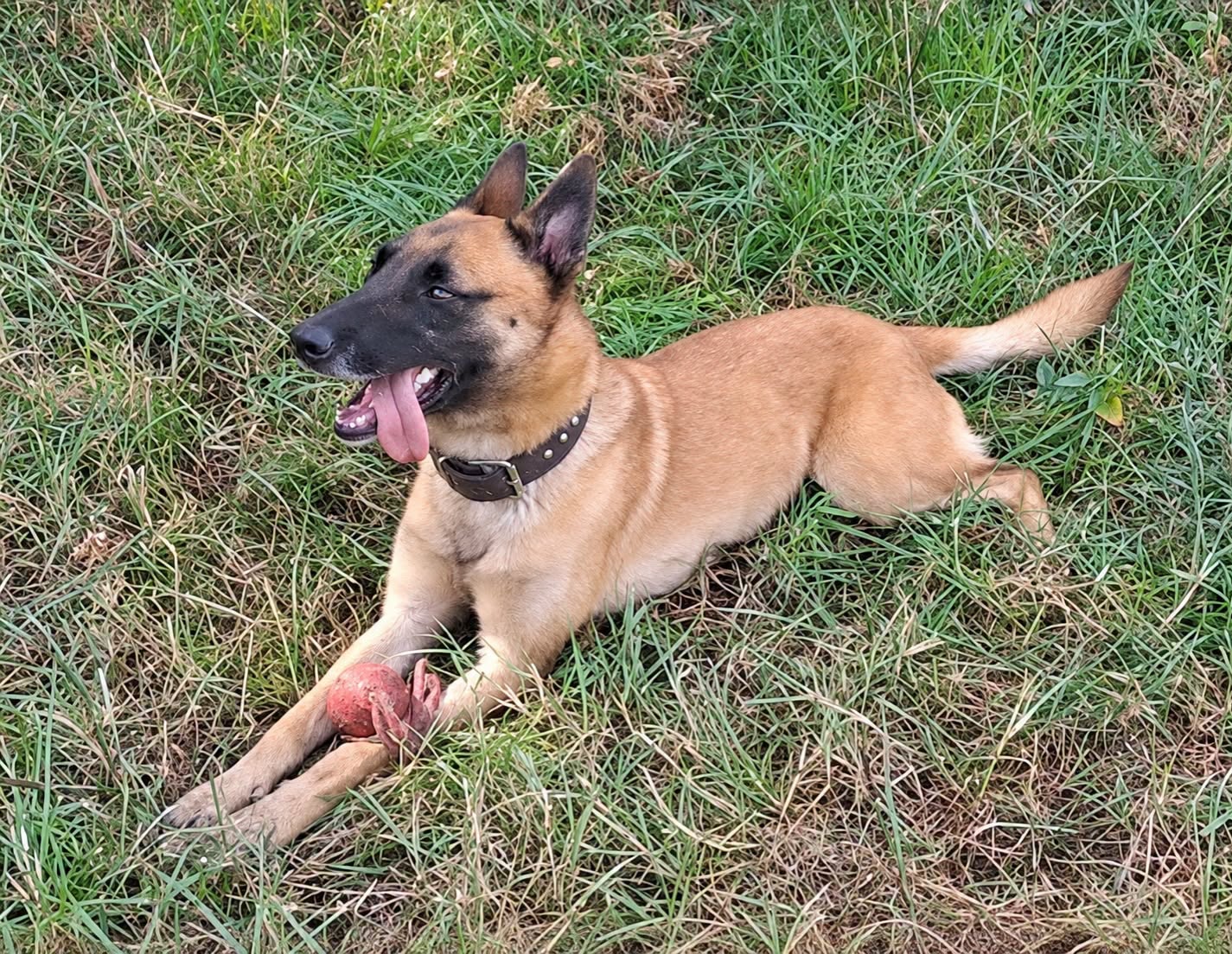

The National Council of SPCAs (NSPCA) is preparing to open a criminal docket against South African Police Service (SAPS) officials following the death of Sky, a police dog who suffered severe injuries after months of documented kennel stress and separation anxiety.
Sky, a five-year-old Belgian Malinois who served as an arson detection dog, was euthanised on 9 September 2026 after being found seriously injured in her kennel at the SAPS Veterinary Hospital in Roodeplaat, Pretoria.
The NSPCA says its investigation uncovered evidence that Sky was kept in conditions that caused unnecessary suffering, despite veterinary records documenting her distress and the risks associated with her environment.
The animal welfare organisation intends to pursue alleged contraventions of the Animals Protection Act 71 of 1962.
Police dog found covered in blood at SAPS veterinary facility
On the morning of 7 September 2026, Sky was discovered lying in her kennel at the SAPS Veterinary Hospital, covered in blood and suffering from serious injuries.
She was rushed to the Onderstepoort Veterinary Academic Hospital for emergency treatment.
Despite receiving veterinary care, her condition deteriorated, and she was humanely euthanised two days later, on 9 September.
Following her death, the NSPCA’s Special Projects Unit launched an investigation into the circumstances surrounding her injuries and the care she had received.
Inspectors examined the facility, held two meetings with SAPS and reviewed Sky’s veterinary records, treatment history and post-mortem findings.
The investigation raised concerns about whether appropriate steps had been taken to address her documented welfare problems.
Veterinary records reveal six months of distress
According to the NSPCA, Sky’s difficulties began at least six months before her death.
In March 2026, she received treatment for injuries to her face and legs, as well as teeth that had been torn from her jaw.
Her veterinary records also documented a history of escaping from her kennel.
While hospitalised, Sky repeatedly attempted to escape and injured herself again.
She was subsequently diagnosed with severe kennel stress and separation anxiety and prescribed medication.
However, rather than being removed from the environment associated with her distress, she was confined to a small indoor kennel with additional reinforcements securing the door.
By August 2026, her veterinary records described her prognosis within the SAPS environment as poor.
She remained at the facility until she was found critically injured in September.
The NSPCA says Sky’s records showed that her ability to cope with her environment had not improved during the six months preceding her death.
Post-mortem reveals signs of chronic stress
The post-mortem examination found extensive injuries to both of Sky’s front legs, accompanied by widespread muscle damage.
According to the findings, the damage was consistent with a prolonged period of physical exertion during a traumatic event.
Her condition would likely have been fatal had she not been euthanised.
The examination also identified:
- Older wounds that had been stitched
- Tooth wear inconsistent with her age
- Changes to her adrenal glands indicative of chronic stress
The NSPCA says these findings, considered alongside her veterinary history, point to sustained distress rather than an isolated incident.
NSPCA questions how SAPS treats retired working dogs
The investigation has also raised concerns about how working animals are managed when they can no longer perform their duties.
According to the NSPCA, Sky’s records indicated that when she could no longer work, she was to be disposed of as a SAPS asset through a supply chain process.
Senior Inspector de Klerk, manager of the NSPCA’s Special Projects Unit, criticised the approach.
“Sky was a working dog for SAPS. When she could no longer work, her records directed that she be disposed of as an asset of the SAPS through a supply chain process. Whatever that process was meant to lead to, she remained in a kennel environment that her records linked to her stress. Sky was a sentient being, and no working animal should ever be treated as an asset,” said Senior Inspector de Klerk, manager of the NSPCA’s Special Projects Unit.
The organisation says Sky’s case highlights the need for proper retirement, rehoming and end-of-life planning for animals used in law enforcement and private security.
Working animals are protected under South African law
The NSPCA has emphasised that police dogs, security dogs and horses used in law enforcement are protected by the Animals Protection Act in the same way as other animals.
Those responsible for their care have a legal duty to protect their welfare throughout their lives, including after they are no longer able to work.
The organisation is calling on SAPS and other institutions that use working animals to ensure that decisions about retirement, rehoming and end-of-life care are based on animal welfare rather than administrative or supply chain procedures.
It says Sky’s case raises broader questions about the treatment of working animals once their service ends.
NSPCA to pursue matter through criminal justice system
The NSPCA has confirmed that it will open a docket against SAPS officials for alleged contraventions of the Animals Protection Act.
The organisation, whose inspectors enforce the legislation nationally, says it will continue monitoring the welfare of working animals and follow the matter through the criminal justice process.
The planned criminal complaint concerns alleged offences. No finding of criminal guilt against the officials has been reported in the information released by the NSPCA.
How to report suspected animal cruelty
Members of the public who are concerned about the treatment or welfare of a working animal are encouraged to report the matter to the NSPCA.
NSPCA contact details:
- Telephone: 011 907 3590
- Email: nspca@nspca.co.za
The NSPCA says its work will continue to focus on ensuring that animals used in service roles receive appropriate care throughout their lives, including when their working duties come to an end.









Leave a comment