

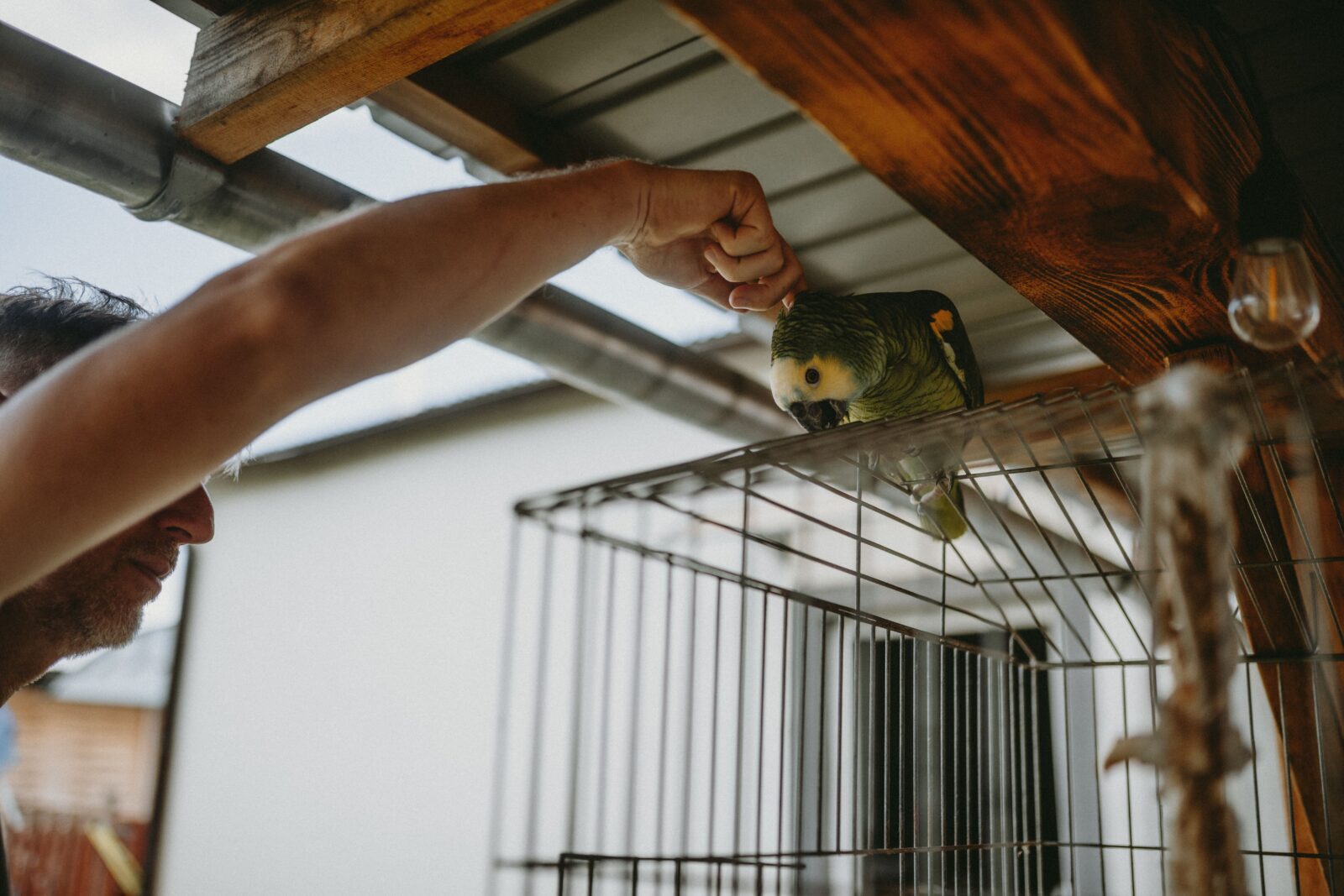

Holes, colour changes and damage to a pet bird’s feathers sometimes provide early warning signs of health problems, according to Dr Dorianne Elliott, an avian and exotic animal veterinarian at Valley Farm Animal Hospital.
Birds often hide signs of illness, making changes in their feathers worth discussing with an avian veterinarian. Feather plucking and chewing also need investigation because the causes range from stress and loneliness to underlying disease or chronic pain.
“When examining the feathers of our pet bird, there are multiple visible changes to their normal appearance that can indicate the health status of the bird and potentially give early warning signs of disease,” says Elliott.
What Different Feathers Do
Feathers serve several purposes beyond flight.
“Birds use them for temperature regulation, for camouflage, for display (both to ward off rival males and to attract mates) and, of course, for flight,” says Elliott.
Different feather types perform different roles.
“The body is covered with fluffy down feathers which trap air and help to minimise heat loss,” she explains. “Covering these are the contour feathers – those that keep the bird waterproof and provide colour and streamlining.”
The wings and tail have long, strong flight feathers attached to bone, designed to provide lift with minimal effort.
“And lastly, specialised sensory filoplumes lie amongst the other feathers to allow the bird to sense the feather position,” she adds.
“Feathers are unique to birds among all the animals still existing on our planet,” says Elliott.
The supplied background also describes protofeathers in dinosaurs more than 200 million years ago. These single, wispy filaments were likely used for insulation, with modern birds evolving from these ancestors.
Holes and Stress Bars in Feathers
Elliott explains that feather mites sometimes chew holes in feathers. These holes are easier to see with lighting behind the feather.
Horizontal, see-through lines, particularly on flight feathers, are known as stress bars. According to Elliott, these indicate a period of stress or disease while the affected feather was growing.
Feather Colour Changes Need Attention
Unexpected colour changes are another reason to seek veterinary advice.
“For example,” she says, “if a grey bird such as an African Grey parrot suddenly develops pink feathers on the body, this can indicate either damage to that feather follicle (perhaps from being repeatedly plucked out) or potentially, a problem with the bird’s liver function. The sudden appearance of yellow feathers on a green bird may indicate similar problems.”
Shiny green and blue feathers in Amazon parrots and macaws sometimes develop black patches. Possible explanations include a fungal infection on the feathers or oil transferred from a human caregiver’s hands.
Elliott advises consulting an avian veterinarian for safe treatment.
Feather Plucking Has Several Possible Causes
Captive parrots sometimes develop feather destructive behaviour, including pulling out their feathers or chewing them, a behaviour known as barbering.
“Feather destructive behaviour has numerous causes, from psychological issues such as stress, hormonal activity or loneliness, to medical causes – including the presence of a skin infection, an underlying disease, nutritional deficiencies or chronic pain,” says Elliott.
Owners should visit an avian veterinarian to investigate the cause.
Daily Care for Healthy Feathers
Elliott recommends suitable housing, a varied diet, enrichment, companionship and routine veterinary care to support long-term health.
Her guidance includes:
- Choose a suitable cage. Provide as much space as possible and keep the cage free of rust and flaking paint. Birds sometimes eat paint flakes, risking heavy metal poisoning.
- Provide a varied diet. For parrots, the recommended base is good-quality parrot pellets, alongside vegetables, some fruit and limited healthy seeds and nuts.
- Offer enrichment. Different perches, ropes, swings, destructible wood blocks and foraging toys provide activities. Foraging toys require the bird to perform an action to receive a reward, such as a favourite treat.
- Consider individual social needs. Some birds benefit from living in a flock, while others prefer human companionship.
- Arrange routine veterinary care. Elliott recommends an avian veterinary health check at least once a year.
Changes in feather condition and destructive behaviour deserve attention. Alongside daily care, veterinary assessment helps owners investigate the cause of a problem and seek appropriate treatment.






Leave a comment