

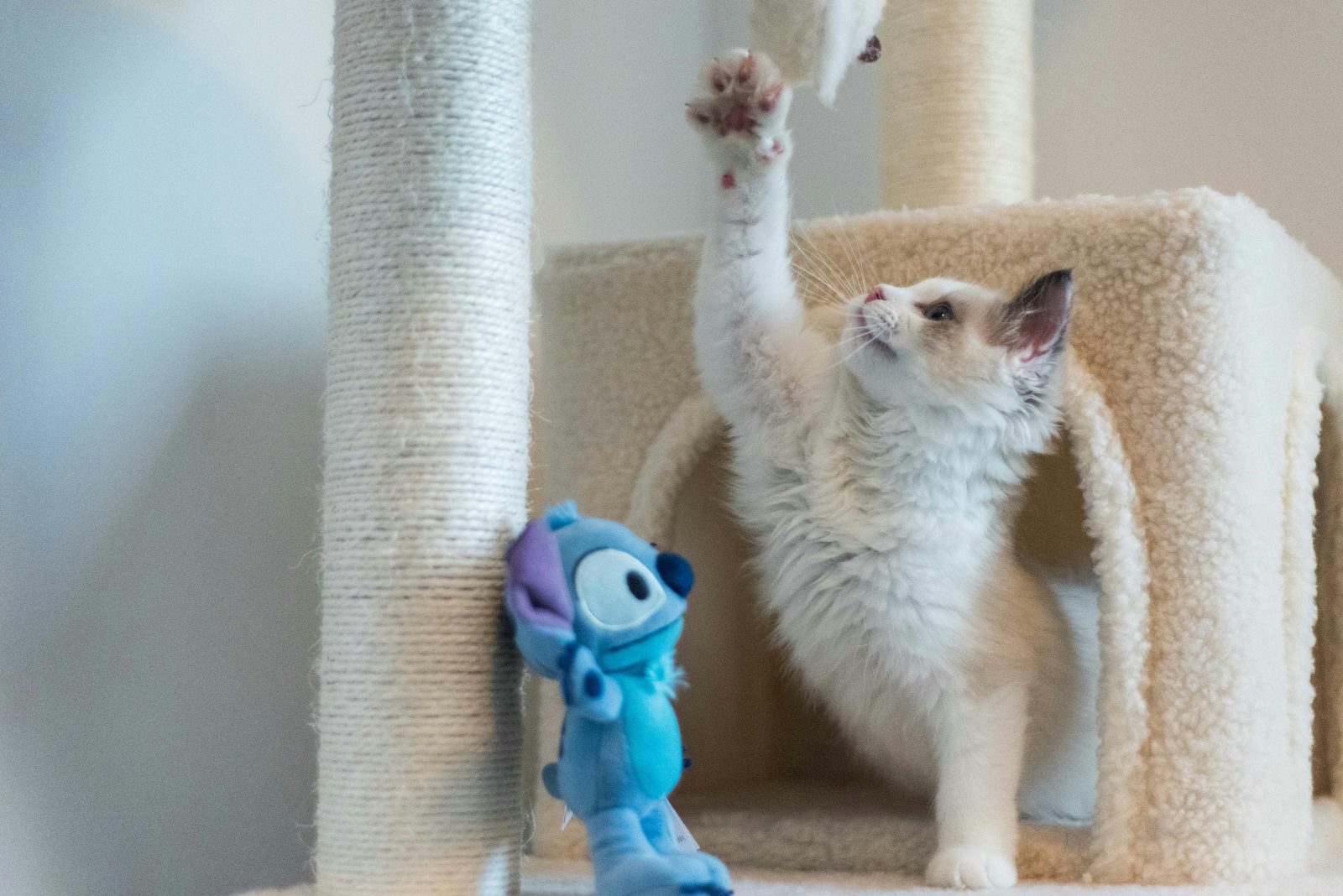

If you live with a cat, you already know scratching is not optional. It is part of how cats move, stretch and interact with their environment. Your sofa might suffer the consequences, but for your feline companion, scratching sits alongside grooming, sleeping and exploring as a natural daily activity.
A scratching post offers one of the simplest ways to support this instinct while protecting your furniture.
Why scratching matters to cats
Scratching is often mistaken for bad behaviour. In reality, it supports several important physical and behavioural needs.
Claw maintenance
Cats scratch to keep their claws healthy. The rough surface removes the dead outer layer of the claw, revealing a sharper layer underneath. This natural process helps maintain claw strength and shape.
Stretching and exercise
When cats stretch upward against a post, they engage muscles in the back, shoulders and legs. This full-body stretch helps maintain flexibility and physical activity, which is particularly important for indoor cats.
Marking territory
Cats have scent glands in their paws. Scratching leaves both visible marks and scent signals that communicate ownership of a space. It forms part of how cats establish comfort within their environment.
Stress relief
Scratching also helps cats release energy and tension. Many cats scratch after play sessions, during moments of excitement or when greeting their owners after time apart.
Why a scratching post is essential
Without an appropriate scratching surface, cats will improvise. Carpets, curtains and sofas often become the next best option.
A scratching post gives cats a dedicated place to express their natural behaviour. It protects furniture, supports physical activity and provides mental stimulation.
Animal behaviour experts often recommend placing several scratching areas around the home, particularly in locations where a cat already scratches.
What to look for in a scratching post
Choosing the right scratching post makes a significant difference. If the post fails to meet a cat’s needs, the cat will simply ignore it.
Stability
A scratching post must feel solid. If it moves or tips while a cat scratches, the cat will quickly lose confidence in it. Look for posts with wide, heavy bases that remain stable during use.
Height
Cats enjoy stretching their bodies while scratching. The post should allow them to extend fully upward. A general guideline is that adult cats are around 60 to 90 centimetres tall.
Material
Cats respond strongly to texture. Common scratching materials include:
• Sisal rope or fabric. Durable and widely preferred by cats
• Corrugated cardboard. Affordable and satisfying to shred
• Carpet. Familiar to cats, although it can sometimes encourage scratching on household carpets
Sisal tends to provide the most reliable long-term surface.
Vertical or horizontal design
Some cats prefer vertical scratching posts. Others enjoy scratching along the floor.
Horizontal scratch boards or pads work well for older cats or those less interested in stretching upward. Offering both styles helps identify your cat’s preference.
Placement
Location influences whether a cat will use the post.
Cats often scratch after waking up. Placing a post near sleeping areas increases the likelihood of use. Another effective location sits near furniture that the cat already scratches.
Added features
Some scratching posts form part of larger cat trees with climbing platforms, hiding spaces or attached toys. These options add enrichment and activity, particularly for indoor cats who benefit from climbing and exploration.
A scratching post supports natural behaviour while helping maintain harmony between cats and their human companions.






Leave a comment