

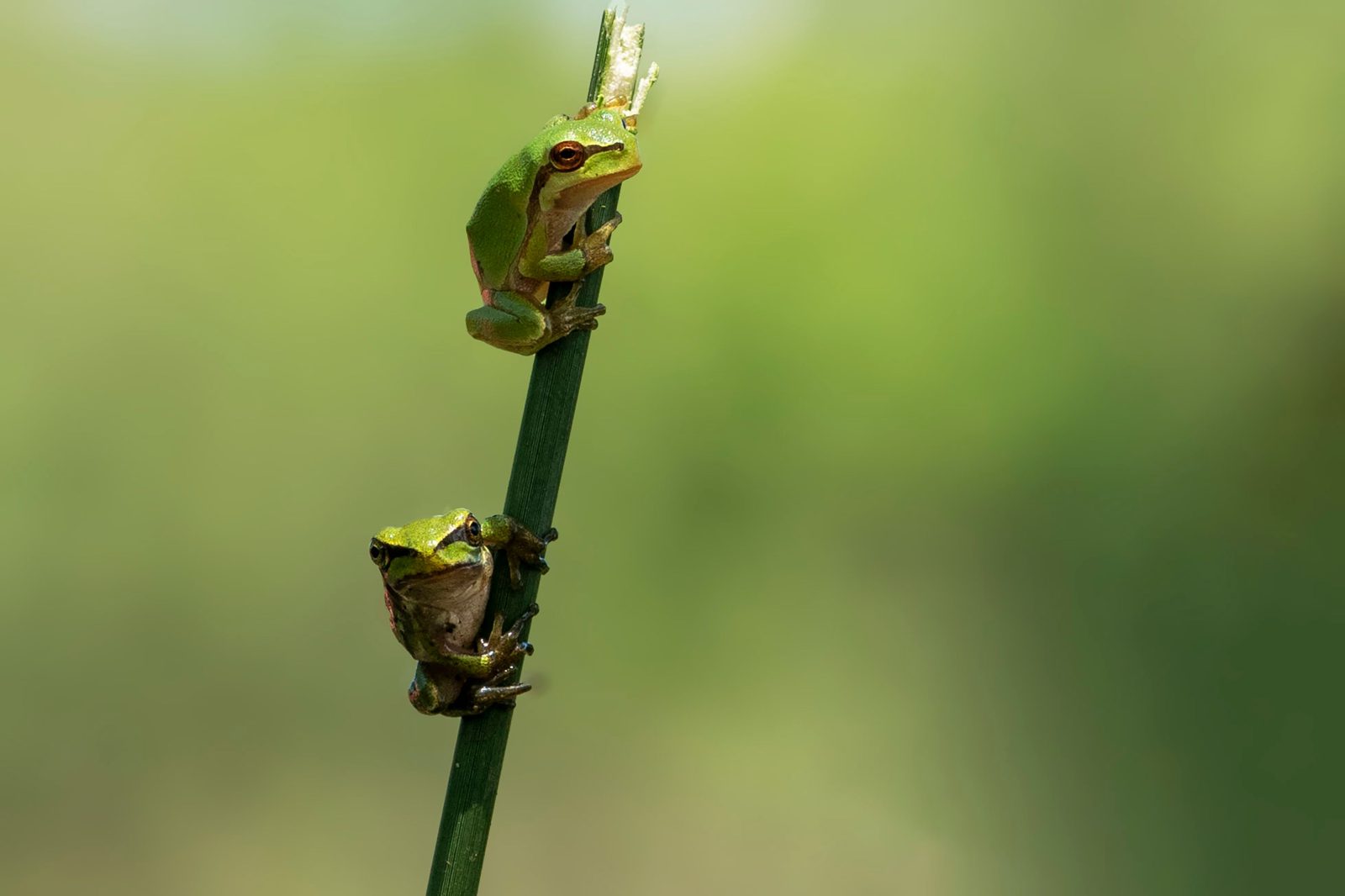

Think frogs are just green, slimy and noisy? Think again.
Frogs have been around for more than 200 million years, surviving long before flowers appeared on Earth. Today, there are more than 7,500 known species, from transparent glass frogs to amphibians that can freeze solid and come back to life. They can be found on every continent except Antarctica, and South Africa is home to more than 130 frog species.
Here are 10 fascinating frog facts that are guaranteed to get people talking.
1. Frogs drink through their skin
Unlike humans, frogs don’t drink water with their mouths. Instead, they absorb it through a specialised area on their belly and thighs known as the “drinking patch”.
Because they absorb water directly through their skin, frogs are extremely sensitive to pollution, making them important bioindicators of environmental health.
2. Frogs breathe through their skin
Frogs don’t rely only on their lungs.
When underwater, many species breathe entirely through their moist skin, allowing them to stay submerged for long periods.
3. They shed and eat their own skin
Around once a week, many frogs shed their skin.
Instead of leaving it behind, they pull it off with their legs and eat it, recycling valuable nutrients while leaving little trace for predators.
4. Their eyes help them swallow
A frog’s eyeballs do more than help it see.
When a frog blinks, its eyes sink into its head, pushing food down its throat and helping it swallow.
5. Frogs can’t vomit
If a frog eats something harmful, it has a remarkable way of dealing with it.
Its stomach can turn inside out through its mouth, empty its contents and then slide back into place.
6. Some frogs can freeze solid and survive
The Wood Frog, found in Alaska and Canada, can survive freezing temperatures that would kill most animals.
During winter, its heart and brain temporarily stop functioning as ice forms in its body. It produces large amounts of glucose that act like natural antifreeze, allowing it to thaw and continue living when spring arrives.
7. The world’s smallest vertebrate is a frog
The tiny Paedophryne amauensis holds the record as the world’s smallest known vertebrate.
Discovered in Papua New Guinea in 2009, adults measure an average of just 7.7 millimetres long, making them smaller than many houseflies.
8. The largest frog is the Goliath Frog
The Goliath Frog (Conraua goliath) is the largest living frog on Earth.
Found in Cameroon and Equatorial Guinea, it can grow up to 32 centimetres long and weigh as much as 3.3 kilograms.
9. The world’s most poisonous frog is endangered
The Golden Poison Frog is considered one of the most toxic animals on Earth.
Native to Colombia’s rainforests, it carries enough batrachotoxin to kill multiple humans. Despite its powerful natural defence, habitat destruction has led to the species being classified as endangered.
10. One frog breaks its own bones to grow claws
The Hairy Frog (Trichobatrachus robustus), also known as the Wolverine Frog, has one of the strangest defence mechanisms in the animal kingdom.
When threatened, it deliberately breaks the bones in its toes, forcing the sharp bone fragments through its skin to create temporary claws.
Frogs are far more remarkable than they appear
From breathing through their skin to surviving frozen winters and growing claws from their own bones, frogs are among the most extraordinary animals on the planet.
The next time you hear one croaking after the rain, remember there’s much more to these incredible amphibians than meets the eye.







Leave a comment